Why Some Clothes Feel Like You and Others Just Hang There
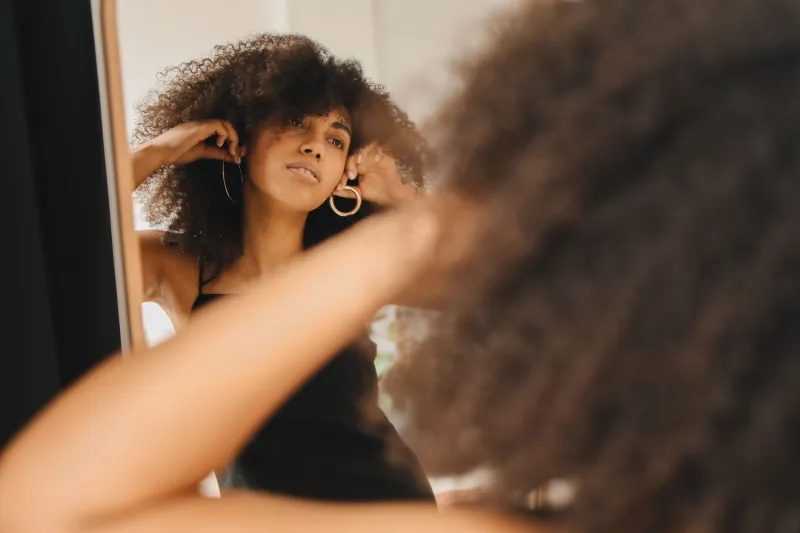
You know that thing that happens when you put on a certain outfit and something just clicks? Your shoulders drop, you catch a glimpse of yourself in the mirror, and you think — yeah, that's me. And then there's the other kind of morning. The one where you've tried on six things, nothing feels right, and you end up in the same jeans and a safe top because at least that doesn't feel wrong.
Here's the thing: that gap between those two experiences isn't random. It's not about having the "right" clothes or spending more money. It's about something a lot more personal — and honestly, a lot more interesting.
The Science of Why Clothes Make You Feel Things
Researchers actually have a name for this. Enclothed cognition is the idea that what you wear influences your psychological state — not just how others perceive you, but how you perceive yourself. Studies have shown that people perform differently, carry themselves differently, and even make different decisions depending on what they're wearing.
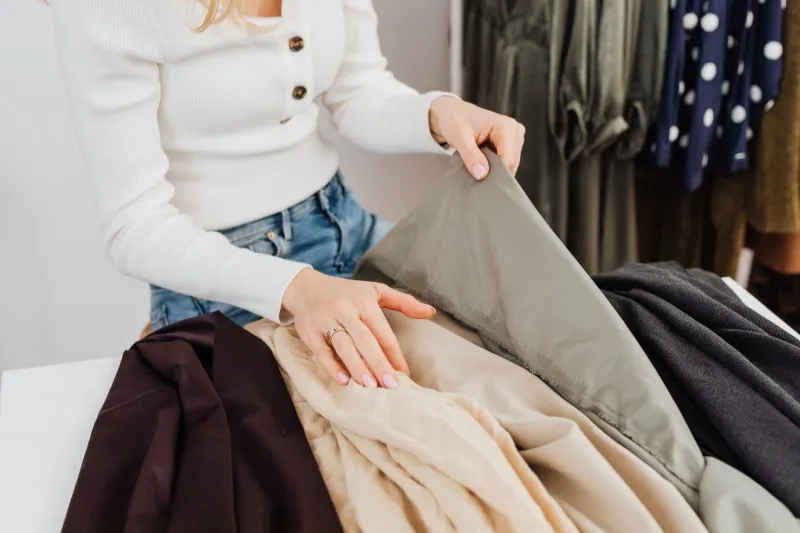
But beyond the big-picture psychology, there's also something more tactile going on. Texture plays a huge role in how a garment makes you feel moment to moment. A scratchy tag, a waistband that digs in after lunch, a fabric that clings in a way you're constantly aware of — these aren't minor annoyances. They're a low-grade distraction that pulls you out of your own head and into a loop of physical self-consciousness.
On the flip side, a fabric that moves well, a fit that doesn't require constant adjustment, a silhouette that feels familiar and easy — those things actually free up mental space. You stop thinking about your clothes and start thinking about your life. That's the goal.
The Hanger Test vs. The Wearing Test
One of the sneakiest traps in fashion is falling in love with how something looks on the hanger — or on someone else — and then wondering why it never quite feels right on your body in real life.
A piece can be objectively beautiful, technically flattering, and completely wrong for you. Maybe it's a color that looks stunning in photos but washes you out in daylight. Maybe it's a cut that's everywhere right now but requires a level of confidence you just don't feel in it yet. Maybe it was expensive, and that guilt is making you keep it even though you've worn it exactly once.
The hanger test tells you nothing. The wearing test tells you everything.
Next time you're evaluating something in your closet, actually put it on. Walk around in it. Sit down. Do the things you'd do in a real day. Then ask yourself: Am I thinking about this outfit right now, or am I just living my life in it? If you're tugging, adjusting, or second-guessing, that's data.
Building Your Personal Confidence Inventory
Here's a practical framework I love for sorting through a closet with intention — not just organization, but honest evaluation.
Pull out everything you actually wear. Not everything you own, just the stuff that gets rotation. Lay it out. These are your working pieces.
Notice what they have in common. Is it a specific fabric? A certain fit — relaxed, structured, cropped? A color palette that keeps showing up? Most people have a confidence uniform hiding in plain sight, and it usually has a pattern once you look.
Rate how each piece makes you feel — not look. This distinction matters. Something can make you look great on paper but feel uncomfortable, overdressed, underdressed, or just not like yourself. Give each item a gut-check score: Does this feel like me? Does this feel good to be in?
Hold the expensive stuff to the same standard. This is where people get tripped up. A $200 blouse that you never reach for because it feels a little stiff and formal doesn't deserve closet real estate just because of what it cost. Sunk cost is a real thing, and it clutters your wardrobe and your mornings.
Why "Flattering" Isn't the Only Metric
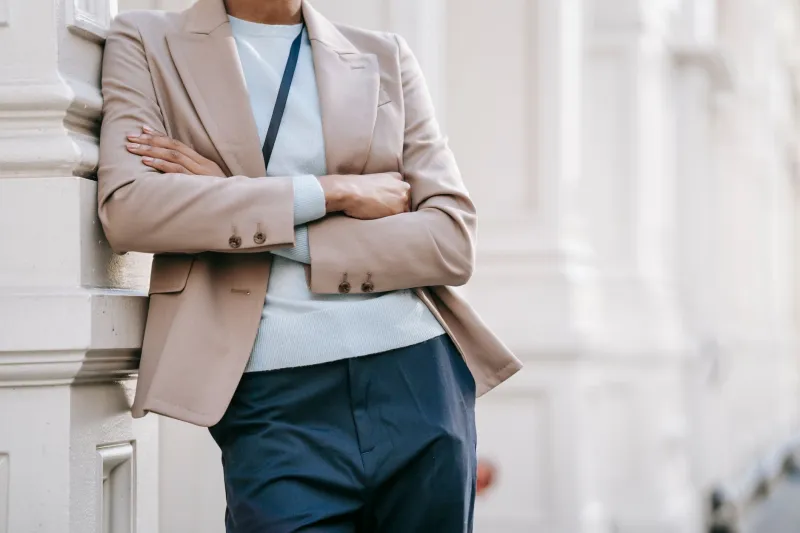
We've been trained to evaluate clothes almost entirely on how they look from the outside — whether they're "flattering," whether they follow the rules for our body type, whether they're appropriate for the occasion. And look, those things matter sometimes. But they're not the whole picture.
Feeling good in something is its own kind of flattering. Confidence has a look. When you're comfortable and at ease in what you're wearing, it shows — in how you move, how you engage, how present you are. That reads to other people even if they can't articulate why.
Some of my most-worn pieces are not technically the most impressive things I own. But they're the ones I feel like myself in. And that's a completely different kind of value.
The Pieces Worth Keeping
So what actually deserves space in your closet? Here's my honest take:
Keep the things that make you feel like the best version of your actual life — not your aspirational life, not the life you had five years ago, not the life you think you should be living. The version of you that exists right now, doing the things you actually do.
Keep the things that fit your body today, not the body you're working toward or the body you used to have. Clothes that don't fit — in either direction — are a daily reminder of something other than what you want to be thinking about when you're getting dressed.
Keep the things that feel good to be in. Physically comfortable, emotionally easy, mentally quiet. That last one especially. The best outfit is the one you forget you're wearing because it fits so naturally into who you are.
Everything else? It's taking up space — in your closet and in your head — that could belong to something that actually works.
Getting Dressed Should Feel Like Coming Home
I know that sounds a little much, but stick with me. The clothes that feel like you — the ones that make you stand a little straighter and move through your day with a little more ease — those aren't just garments. They're shorthand for who you are. They do some of the work of showing up for you before you've even said a word.
Building a wardrobe around that feeling isn't shallow. It's actually one of the more practical things you can do for your daily life. Because when getting dressed is easy and good, the rest of the morning tends to follow.