Same Jeans, Different Day: Why an Outfit That Felt Perfect Can Suddenly Feel All Wrong
There's a specific kind of wardrobe frustration that doesn't get talked about enough. It's not about having nothing to wear. It's about standing in front of a piece you know you love — a piece you've worn confidently before — and feeling absolutely nothing. Or worse, feeling like it's wrong somehow.
We tend to chalk it up to being in a bad mood or bloated or tired. And sometimes that's genuinely all it is. But sometimes it's something more interesting. Something worth actually unpacking.
Because understanding why your relationship with an outfit shifts can tell you a lot — about your style, your mental state, and whether that piece still has a future in your closet.
The Context Problem
Here's something a lot of us forget: we don't just wear clothes. We wear clothes somewhere, for someone, while feeling something. That context becomes baked into the garment itself.
You wore that silk top to a birthday dinner where you laughed all night and got compliments. The next time you reach for it, your brain is already running a comparison. The ordinary Tuesday morning you're dressing for doesn't have the same energy — and suddenly the top feels like it's promising something the day can't deliver.
Psychologists call this kind of thing state-dependent memory — the idea that our feelings about something are tied to the circumstances under which we first experienced it. Fashion isn't immune to this. In fact, clothing might be one of the most emotionally loaded categories of objects we own.
So before you decide a piece no longer works for you, ask yourself: is the item the problem, or is it the context mismatch?
Confidence Is Not a Constant
This one's a little uncomfortable but worth saying out loud: your confidence fluctuates, and your wardrobe feels the effects.
On a high-confidence day, you can pull off almost anything. Bold print? Sure. Unexpected silhouette? Why not. You're not overthinking it — you're just wearing the clothes. On a low-confidence day, even your most reliable pieces can start to feel like they're exposing you somehow, like they're drawing attention you're not ready for.
The outfit didn't change. Your internal armor did.
This is why I always suggest keeping a short mental (or actual) list of what I call anchor pieces — the items that have worked across multiple different emotional states. A great-fitting trouser. A jacket that makes you stand up straighter. Pieces that have proven themselves in good weeks and hard ones. Those are the items worth investing in and protecting.
Everything else? It might just be a fair-weather friend in your wardrobe.
The Social Media Effect Nobody's Talking About
You loved a dress. You wore it, posted it, got your likes, moved on. A few months later you see someone else wearing the same dress — styled differently, maybe on a body that looks nothing like yours — and suddenly you're not sure how you feel about it anymore.
Or the reverse: you scroll past a trend so many times that something in your brain starts to quietly file your own similar piece under "overdone," even if nobody in your actual life has ever mentioned it.
Online fashion consumption is doing something subtle and kind of sneaky to our personal style instincts. It's accelerating the emotional lifecycle of our clothes. Items we once felt original in can start to feel worn out by association — not because we've actually worn them out, but because we've seen them worn out online.
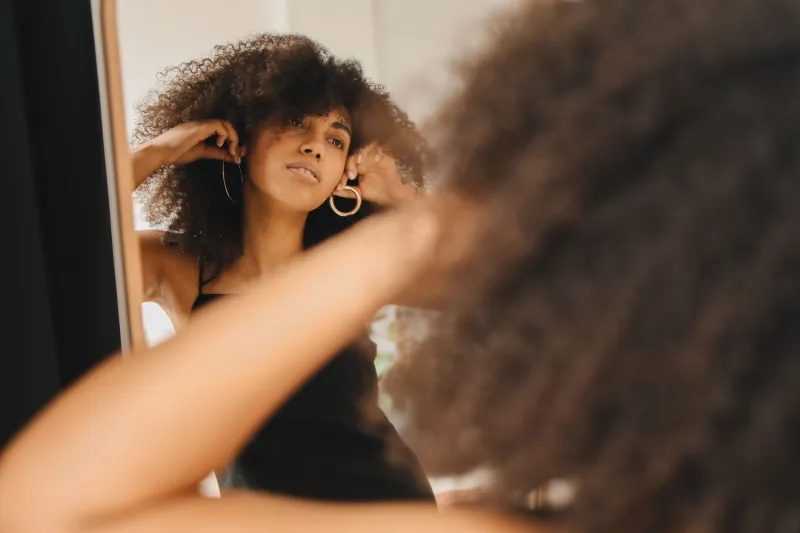
The fix isn't to log off forever (though a break never hurts). It's to periodically reconnect with your wardrobe offline — trying things on without the context of your feed, without comparing yourself to a curated grid. Just you, the mirror, and your actual honest reaction.
Small Body Shifts, Big Wardrobe Feelings
Our bodies change. Not always dramatically, not always permanently, but they shift — with seasons, with stress, with age, with the general business of being alive. And clothing is unforgiving in the way it tracks those changes.
A waistband that fits differently. A shoulder seam that's migrated slightly off. A hem that used to hit at the most flattering point and now hits somewhere awkward. These aren't failures. They're just fit realities.
But here's what's worth noting: sometimes we abandon a piece entirely when a minor alteration would bring it back to life. A tailor can do more than most people realize for less money than most people expect. Before you write something off because it's not sitting right, consider whether it's actually a fit issue with a solution.
And if your body has genuinely changed in a more lasting way — that's okay too. Dressing the body you have right now is always going to feel better than trying to dress the body you're hoping to get back to.
So Is It a Mood or a Message?
This is the real question, right? How do you know if your sudden discomfort with an outfit is just a bad day bleeding into your closet, or an actual signal that your style is evolving past that piece?
Here's the test I use:
Wait three wears. If you've avoided something for weeks, try it again on a genuinely good day — a day when you feel decent, rested, and not particularly stressed. If it still doesn't feel right, that's information. If it feels great again, it was probably the mood.
Notice whether the feeling is specific or general. "I don't want to wear anything today" is different from "I specifically don't want to wear this piece." One is about your emotional state. The other might be about your style.
Ask if the piece still fits your actual life. Sometimes we outgrow things not physically but circumstantially. A going-out top that made sense when you were going out three weekends a month might feel off now that your life looks different. That's not a failure — that's just your wardrobe needing to catch up with your reality.
The Outfit Autopsy Isn't About Guilt
I want to be clear about something: doing this kind of reflection on your wardrobe isn't about beating yourself up for past purchases or convincing yourself to get rid of things. It's about getting smarter about the relationship you have with your clothes.
When you understand why something stopped working — or why it works some days and not others — you start shopping and dressing with a lot more intention. You stop chasing the high of a new piece and start building a wardrobe that holds up across moods, contexts, and seasons.
And honestly? That's where real personal style lives. Not in the outfit that looked great once. In the pieces that keep showing up for you, again and again, no matter what kind of day it is.